
Our Planning Process
Rochester Public Utilities (RPU) is planning for a water system that can serve Rochester for decades to come.
That won't happen all at once. Planning, design and construction will take place over many years. Each step will help guide the next, giving RPU time to study options, share information with the community and make informed decisions. This page outlines where we are today and what comes next.
What Has Happened So Far
- Over the past 110 years, Rochester’s water system grew alongside the City. As demand increased, RPU added wells that draw from the Jordan Aquifer. The most recent well was completed in 2024.
- 2024: Direction from the state. The Minnesota Department of Natural Resources (DNR) informed RPU that new wells in the Jordan Aquifer would not be approved unless other water sources are first evaluated. Before Rochester can increase our groundwater pumping, RPU must show it can do so without harming the environment or using more water than nature can replace.
- 2025: Initial planning began. RPU began developing its water system master plan and a groundwater modeling study. This work includes coordination with other water utilities in Olmsted County.
- July 2026: Study update. RPU shared its early planning work with the Rochester Public Utilities Board and the Rochester City Council during public study sessions.
Where We Are Now
Right now, RPU is conducting an extensive groundwater modeling study. Using computer models, the study helps researchers better understand how water moves underground and how pumping may affect nearby streams, wetlands and groundwater resources.
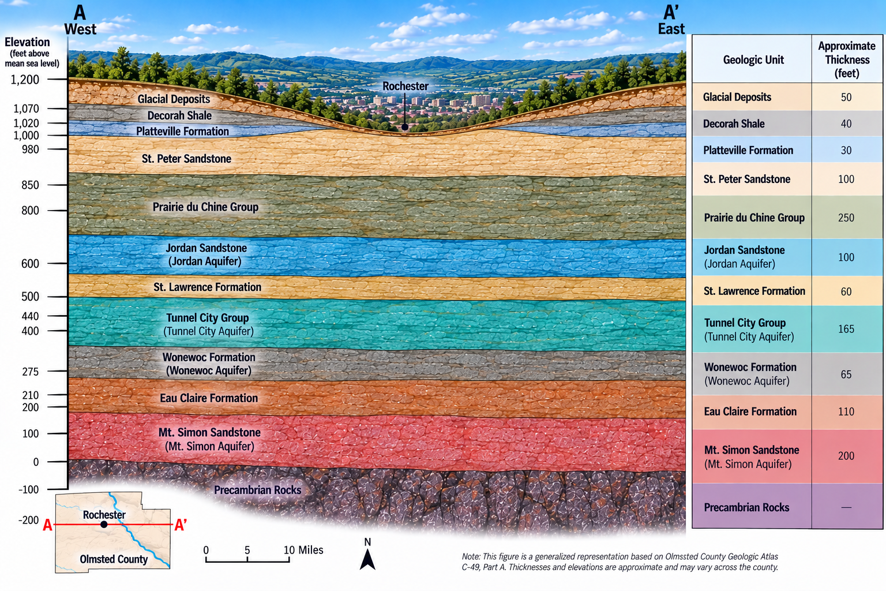
The study will help us answer four important questions:
- Safe Yield: What is a sustainable volume of water that Rochester and surrounding communities can pump from area aquifers without exceeding the ability to recharge over time (Minn. Statutes 103G.287)?
- Stream Base Flow: What is a sustainable volume of water that Rochester and surrounding communities can pump from area aquifers without impacting streams within the area (Minn. Statutes 103G.287)?
- Calcareous Fens: How could increases in groundwater be sustainably continued while avoiding future impact to unique wetland areas (Minn. Statute 103G.233)?
- If the Jordan Aquifer cannot meet our needs, what other water sources could help supply Rochester?
Results of the groundwater modeling studies are expected to be available in late 2026.
Learn more about the groundwater modeling study.
What Comes Next
During the groundwater modeling study, RPU will share results with the DNR to evaluate future options. That includes decisions about where Rochester’s water will come from, how it will be treated and how it will be delivered.
No matter what the study finds, Rochester's water system will need major upgrades. Even if the Jordan Aquifer remains the primary water source, the City may still need improved water treatment and investments in the system that delivers water across Rochester.
Over time, that could include facilities and infrastructure that collect, treat and distribute water more efficiently across the community.
RPU will continue to share information with the public throughout the process. Major decisions will be made in public by the RPU Board and Rochester City Council.
Looking Further Ahead
Water for Tomorrow is about making sure Rochester has a stable, lasting water system for future generations. It is about protecting our water resources, maintaining high water quality and supporting our community long term.
These changes will not happen all at once. Projects will be carefully planned and completed over many years. Starting now gives RPU time to study options, secure needed approvals and pursue state and federal funding opportunities. It also helps spread costs over time and avoid rushed decisions later.
As plans take shape, RPU will continue sharing information and updates with the community.
Safe, reliable water is something Rochester depends on every day. Water for Tomorrow is about making sure that continues for generations to come.
Read the frequently asked questions.
Questions?
We want to hear from you. Email your questions or comments to waterfortomorrow@rpu.org.