
Groundwater Modeling Study
All of Rochester's drinking water comes from groundwater. To plan for the future, Rochester Public Utilities (RPU) needs to answer three important questions:
- How much groundwater is available?
- How could pumping affect streams, wetlands and other natural resources?
- What water treatment processes are needed to protect public health?
The groundwater modeling study currently being conducted as part of the Water for Tomorrow long-term planning process will help answer those questions.
Why We Are Doing This Study
New wells and increases in pumping require approval from the State of Minnesota. As water supply challenges have grown across the state, regulators are placing greater emphasis on protecting groundwater resources and the natural areas connected to them.
In 2024, the Minnesota Department of Natural Resources (DNR) notified RPU that new wells in the Jordan Aquifer would not be approved unless other water sources are evaluated first. Before Rochester can increase groundwater pumping, RPU must also show that they won’t harm the environment or use water faster than nature can replace it.
This study will provide information that both RPU and the DNR can use to make informed decisions about Rochester's future water supply.
The results will help identify how much water can be safely pumped from the Jordan Aquifer and whether other water sources should be considered.
What Is Groundwater Modeling?
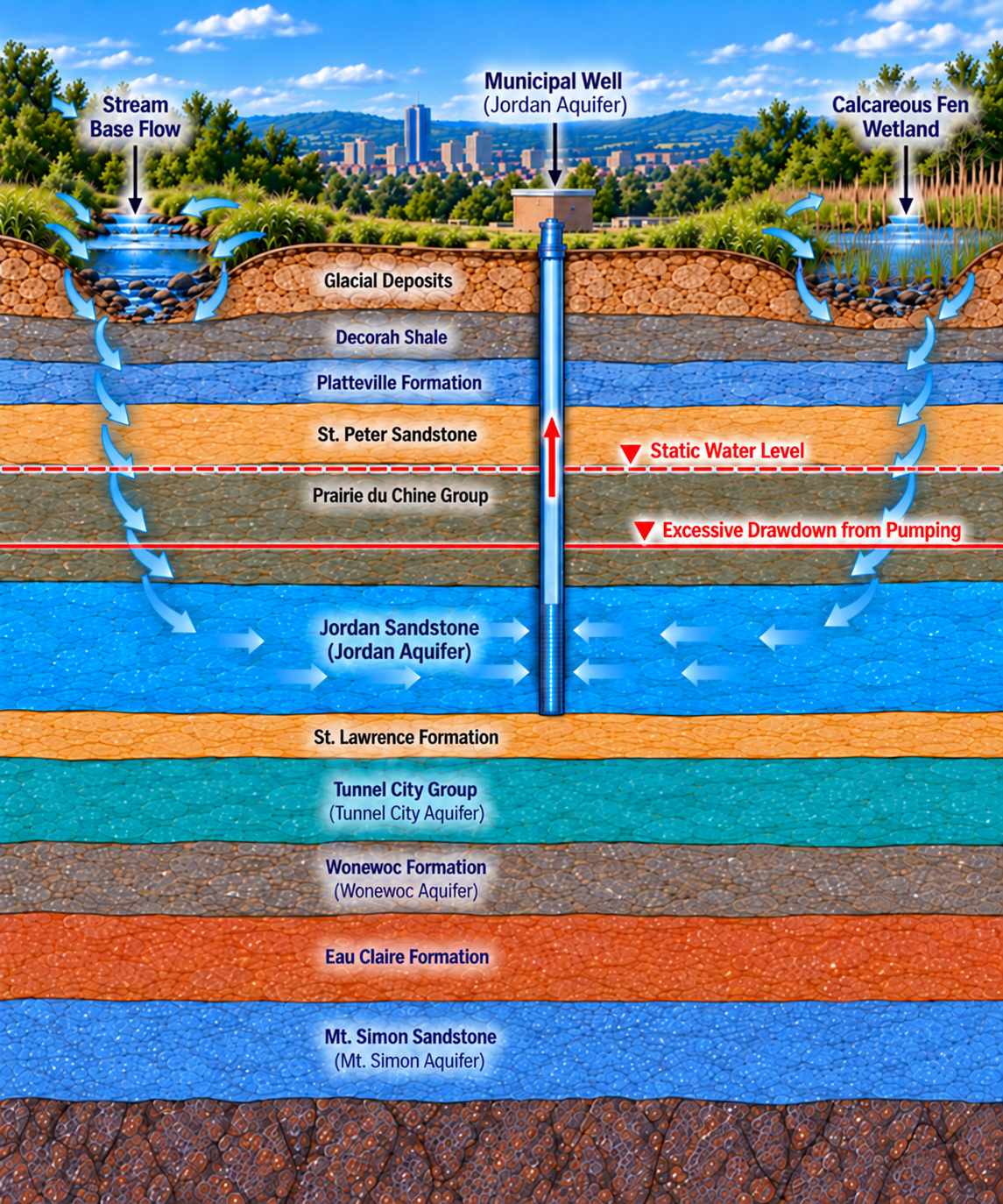
Groundwater modeling uses advanced computer programs to show how water moves underground. It also helps researchers understand how pumping water from wells could affect nearby streams and wetlands.
The study uses a regional numerical MODFLOW groundwater flow model coupled with a Soil Water Balance (SWB) model to simulate groundwater movement, aquifer recharge and changes in groundwater conditions through the 2065 planning horizon. The model evaluates long-term groundwater sustainability and potential impacts of increased groundwater withdrawals on aquifer levels and connected surface-water resources by incorporating:
- aquifer and confining-layer geology
- hydraulic properties
- groundwater storage
- land-use-based recharge
- hydrologic boundaries
The model provides RPU with a tool for evaluating how the groundwater system may respond to changes in water demand and pumping over time. For example, it can be used to test alternative scenarios, such as increasing withdrawals from existing wells or developing wells in new locations, and predict the resulting effects on aquifer levels, groundwater flow and connected surface-water resources.
Did you know?
This study covers more than 1,500 square miles around Rochester.
What The Study Will Tell Us
Groundwater modeling provides a clearer picture of how water moves underground and connects to streams, wetlands and other resources in the region. The study will help us answer three questions:
- How much water can be pumped? The goal is to understand how much groundwater can be used while keeping water levels in the aquifer at healthy levels.
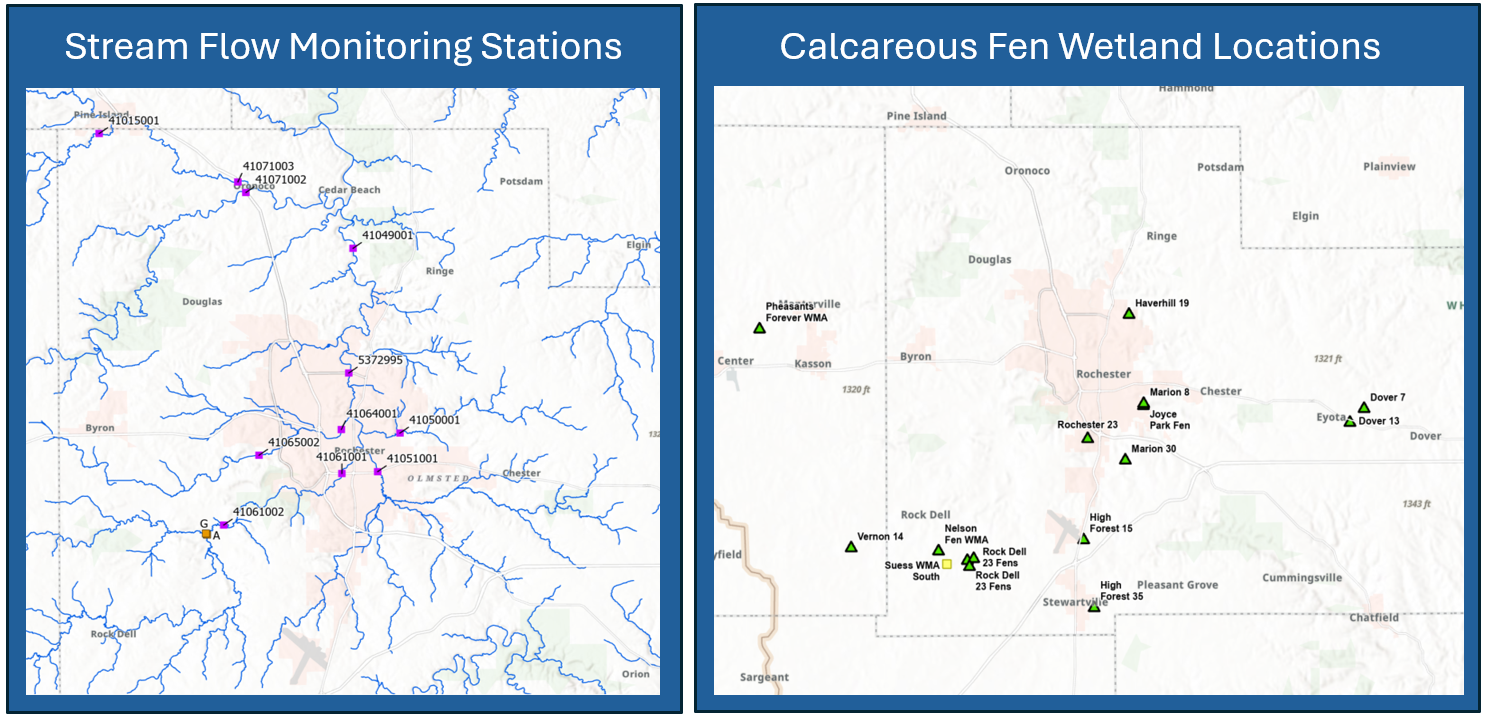
- How does pumping affect stream flow? Many streams in southeastern Minnesota depend on groundwater to keep flowing, especially in late summer when there is little rain.
- How does pumping affect calcareous fens? These are unique wetlands that are highly dependent on groundwater. They are protected under Minnesota law because of their unique plants and wildlife.
If pumping lowers stream flow too much or harms these wetlands, the state may determine that an aquifer is being overused. These are the same standards the state uses to decide if a groundwater source can be used.
Read more about how water sources are evaluated.
Water Sources Being Studied
The study is evaluating both groundwater and surface water options. Surface water is water from rivers and lakes.
Groundwater options
- Other aquifers, including the Wonewoc/Tunnel City Aquifer and the Mt. Simon Aquifer
- Additional water from the Jordan Aquifer, if all environmental standards can be met
Surface water options
- Zumbro Lake, where the South and Middle Forks of the Zumbro River meet
- The South Fork of the Zumbro River near Silver Lake
- The Mississippi River
What Happens After the Study
RPU expects to begin sharing results in late 2026. The findings will help determine whether the current groundwater supply can meet Rochester’s future needs. If it cannot, the groundwater model will help identify other water sources that could be part of the solution.
Either way, Rochester’s water system will require significant investment:
- If a new water source is selected, the City will need infrastructure to collect the water, a treatment plant to filter out contaminants and pipes to deliver it to homes and businesses.
- If the Jordan Aquifer remains the primary water source, the system will still need upgrades to improve water treatment and continue meeting future water quality standards.
The study results will help guide future decisions about Rochester's water supply and the investments needed to provide safe, reliable water for generations to come.
Go back to our planning process.
Read the frequently asked questions.
Questions?
We want to hear from you. Email your questions or comments to waterfortomorrow@rpu.org.